



Bioethics Education International (BEI) advances policy and intercultural bioethics debates from the beginning to the end of life.
Who We Are
BEI is a 501c3 tax exempt not-for-profit international organization incorporated in the State of New York, located in Manhattan.
Who will benefit from BEI’s programs and activities?
The organization benefits students, professionals and policy makers from various fields, such as healthcare, the humanities, and the law, as well as policy makers and the public at large. It aims to provide stakeholders with resources to understand and find solutions to issues in global health, health care, new medical technologies, and the life sciences.
How will BEI achieve its educational and outreach purposes?
Through an online bioethics hub, BEI is offering engaging and interactive e-learning courses, webinars, and training sessions. The hub will offer timely topics in bioethics in creative ways, incorporating an interdisciplinary and intercultural approach to confronting ethical issues in medicine, bioscience, medical technology, life sciences, and the environment. BEI provides public access to international bioethics education, facilitates collaborative learning, networking and community debates across the life course around the globe.
News and Articles
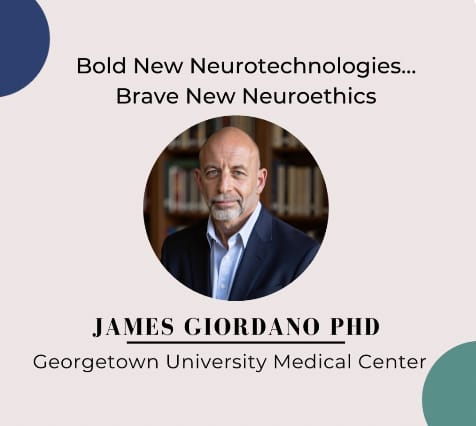
James Giordano PhD -Meet Our Online Winter School Keynote Speakers
We are honored to present James Giordano, PhD, DPhil, Professor Emeritus of Neurology and Biochemistry, and Chair Emeritus, Neuroethics Program, Georgetown University Medical Center, as a keynote speaker for our Online Winter School – Bioethics [...]

Absolutely Essential: Inside Dr. Jonathan Moreno’s Vision for Global Bioethics
Dr. Jonathan Moreno, the David and Lyn (Silfen) University Emeritus Professor and Penn Integrates Knowledge (PIK) Professor at the University of Pennsylvania, shares key insights from his acclaimed book, “Absolutely Essential: Bioethics and the Rules-Based [...]

James J. Hughes PhD- Meet Our Online Winter School Notable Speakers
We are honored to introduce James J. Hughes, PhD as one of our notable speakers for Online Winter School - Bioethics in the New World Order, December 14-18, 2026. NEW WORLD DISORDER - BIOETHICS AND [...]

Doctor Sentenced for $1.9M Medicare Fraud Without Ever Seeing Patients
Steven Powell, a former New Hampshire psychiatrist, was sentenced to 12 months and a day in federal prison for healthcare fraud. Between December 2018 and March 2019, he signed brace orders for more than 500 [...]