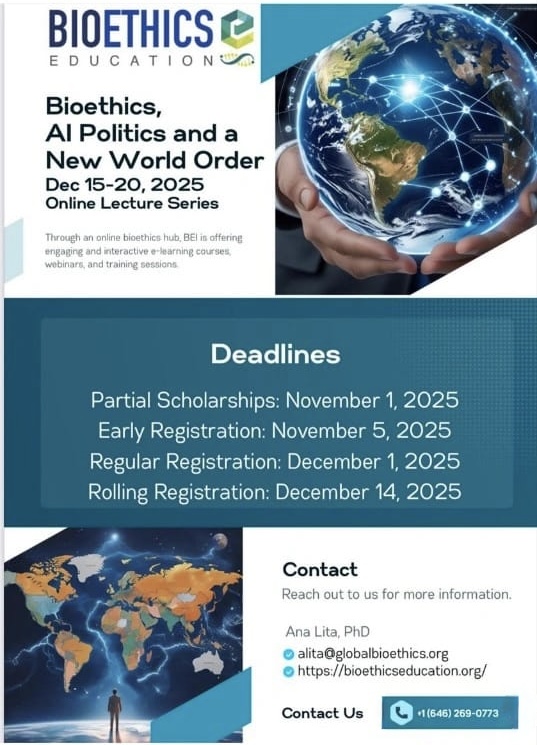
Looking for a bioethics educational opportunity? Bioethics Education International (BEI) is now accepting applications for their online winter school taking place December 15th-20th: Bioethics, AI Politics, and a New World Order. Scholarship Deadline: August 30, 2025.
The intersection of bioethics, AI politics, and the emerging new world order is a complex and multifaceted issue. Here’s a breakdown of the key aspects:
Bioethics in the Age of AI
Bioethics can serve as a moral compass for emerging technologies like AI, ensuring that technological advancements align with human values and dignity.
AI can aid bioethics by analyzing vast amounts of data, identifying patterns, and providing insights that can inform decision-making in complex medical and ethical dilemmas.
Researchers are exploring ways to build morality into AI systems, using approaches like top-down, bottom-up, and hybrid methods to ensure that AI decisions reflect human moral values ¹.
Global Governance and Cooperation
The increasing use of AI in various sectors, including healthcare and defense, raises questions about global governance and cooperation.
International collaboration is essential for developing robust bioethical frameworks that can address the challenges posed by AI and other emerging technologies.
Organizations like Bioethics Education International (BEI) are working to promote global cooperation and discussion on bioethics and AI politics through initiatives like the Online Winter School.
Geopolitics and AI
The development and deployment of AI are influenced by geopolitics, with countries like Germany investing heavily in AI research and development for defense and other applications.
The use of AI in warfare and other areas raises ethical concerns and highlights the need for robust frameworks to govern AI development and deployment.
The US-China trade war has also impacted the development and sale of AI chips, with companies like Nvidia navigating complex regulatory environments ² ³.
Key Challenges and Opportunities
Balancing national interests and global solidarity: Ensuring that AI development and deployment prioritize human well-being and safety while respecting national interests and sovereignty.
Addressing ethical dilemmas: Developing frameworks for addressing complex ethical dilemmas posed by AI and other emerging technologies.
Promoting global cooperation: Fostering international collaboration to address the challenges and opportunities presented by AI and bioethics.
Other Posts

Six Frankfurt Airport workers contracted malaria this summer after mosquitoes were likely carried into Germany on a flight, and two died. The outbreak prompted a rapid investigation, mosquito trapping, and efforts to determine where the [...]

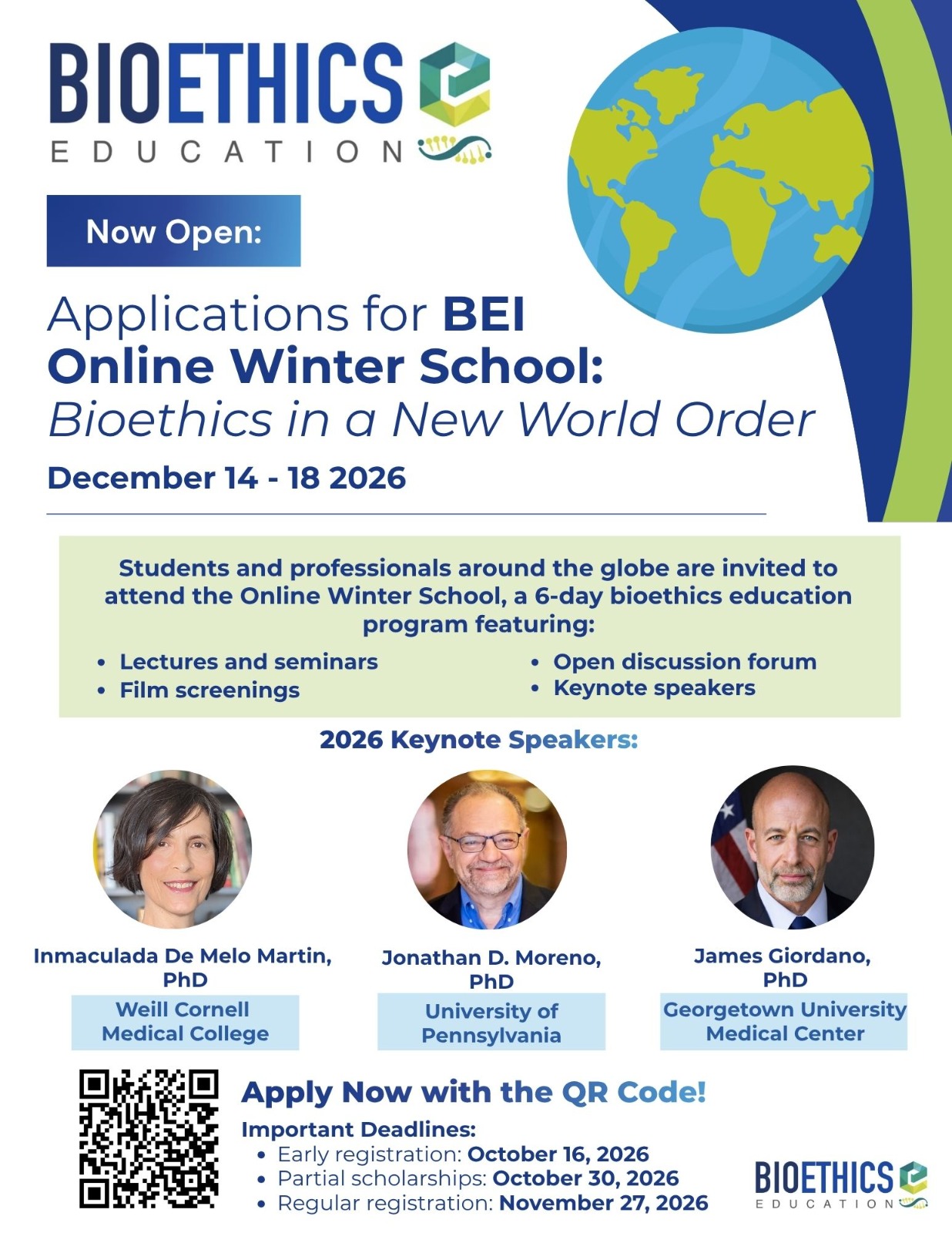
Applications are now open for the 2026 Bioethics Education International Online Winter School, taking place December 14-18, 2026. This year’s theme, Bioethics in a New World Order, will bring together students and professionals from around [...]

As interest in psychedelic therapy grows, more Americans are traveling abroad for treatments that remain restricted in the United States. Reports of inadequate medical screening, serious complications, and sexual abuse have raised concerns about patient [...]

A new study found that at least one in four former NFL players who died between 2016 and 2021 had chronic traumatic encephalopathy, or CTE, a degenerative brain disease associated with repeated head impacts. Researchers [...]

Harvard Business School has launched a $699 AI powered entrepreneurship bootcamp, H.B.S. Foundry, featuring interactive video avatars of its faculty for practicing pitches, sales calls, and board meetings. The AI clones are trained on specific [...]

Scientists have developed an implantable “myograft,” lab grown, continuously contracting muscle tissue that mimicked several benefits of exercise in mice, including greater muscle mass, strength, bone density, and metabolic improvements, even in aged and obese [...]