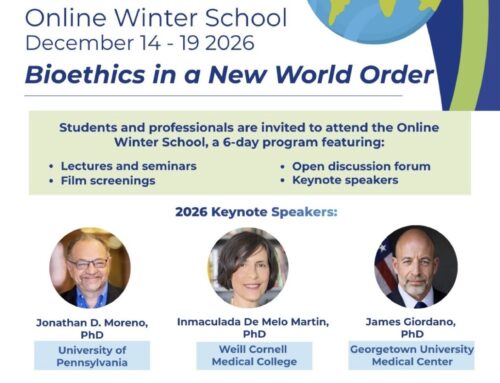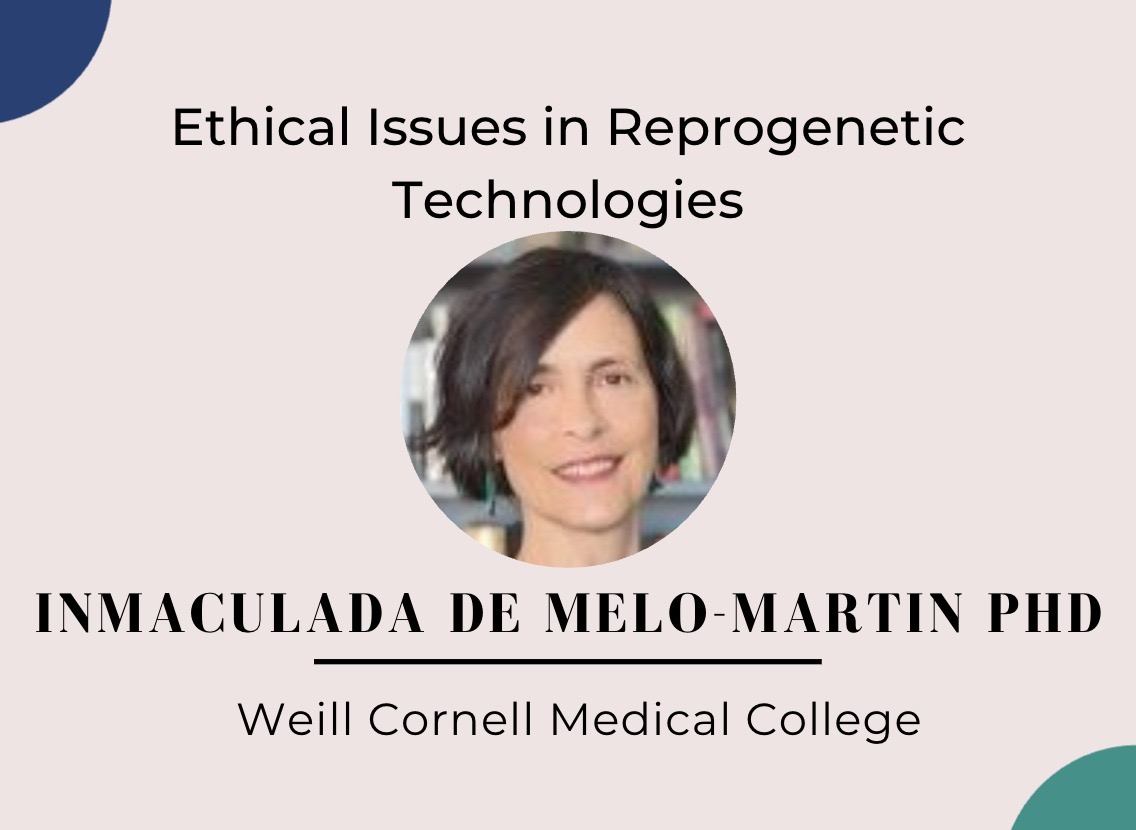
It is our great joy to introduce someone who is not only one of the most thoughtful voices in bioethics today, but also a dear friend and a member of BEI Advisory Board.
Please welcome Inmaculada de Melo-Martín, PhD.
Inmaculada is Professor of Medical Ethics at Weill Cornell Medicine, Cornell University. She holds a PhD in Philosophy and an M.S. in Molecular Biology — and that rare combination is exactly what makes her work so powerful. She understands science from the inside, and she asks the philosophical questions that science alone cannot answer.
She is the author of Rethinking Reprogenetics and, with Kristen Intemann, The Fight Against Doubt — books that have changed how we think about reproductive technologies, trust in science, and what it means to make ethical choices in a world that is changing faster than our moral frameworks.
She challenges us gently but firmly. And she reminds us, always, that behind every technology, every policy, every abstract debate — there are real people, real families, real lives.
Inmaculada, thank you for being here, and thank you for being my friend.
ABSTRACT
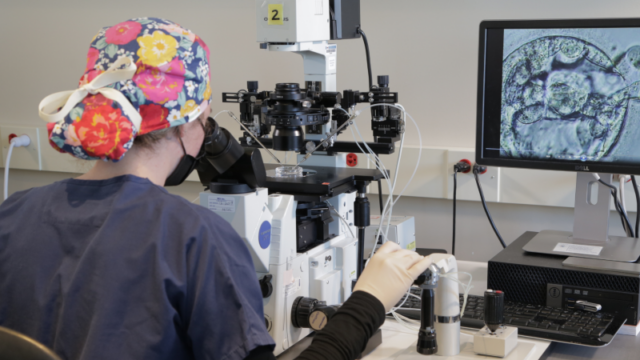
Scientific and technological advances in the areas of reproduction and genetics give us new means to shape the lives of our offspring. We now have an unprecedented ability to control not just whether and when we have children but also to create different family arrangements and decide what children we want to have. These advances thus present us with a variety of important ethical concerns surrounding the creation and alteration of human life. In this session we will offer an overview of reprogenetic technologies and examine some of the ethical questions these technologies raise.
BIO
Inmaculada de Melo-Martín is Professor of Medical Ethics at Weill Cornell Medicine. She holds as PhD in Philosophy and an M.S. in Biology. Her research focuses on ethical and epistemological issues related to biomedical sciences and technologies. She has published extensively on those topics in both philosophy and science journals Scientific knowledge transforms our lives and our societies in positive and negative ways. Science informs public policies that affect communities; scientifically informed public is essential to well-functioning democracies; and some of us become research subjects and are yet affected by scientific research in even more intimate ways. Her work explores epistemic aspects and ethical challenges confronting biomedical research, not only traditional issues related to responsible research conduct, but also questions about the role of values in science and technology, the ethical obligations of scientific communities, and the ways in which research practices and institutions can be most conducive to producing socially relevant knowledge.