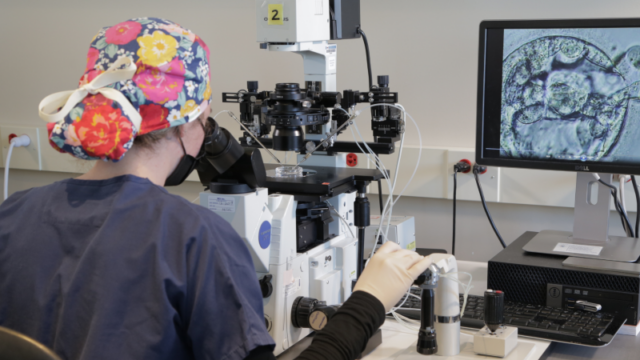
Two studies published this summer, led by Kathy Niakan at Cambridge University and Dieter Egli at Columbia University, used base editing, a technique that alters DNA more precisely than earlier methods, on human embryos. The results renewed debate over embryo gene editing. Experts say the methods appear safer than conventional CRISPR, but mosaicism, where some cells in the embryo go unedited, has not been eliminated. No country currently allows genetic changes that can be passed on to offspring. Bioethicists continue to debate where therapy ends and enhancement begins, along with questions of consent and whether existing tools such as pre-implantation genetic testing already offer safer alternatives. Read more here.
Who Decides When Embryo Gene Editing Is Safe Enough?
Share This Story, Choose Your Platform!
About the Author: Ana Lita