Due to fraudulence and misconduct in research, advances in Alzheimer’s Disease treatments have been hindered. Read More.
Other Posts
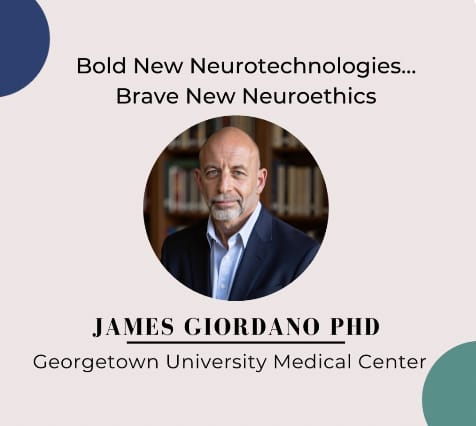
James Giordano PhD -Meet Our Online Winter School Keynote Speakers
We are honored to present James Giordano, PhD, DPhil, Professor Emeritus of Neurology and Biochemistry, and Chair Emeritus, Neuroethics Program, Georgetown University Medical Center, as a keynote speaker for our Online Winter School – Bioethics [...]

Absolutely Essential: Inside Dr. Jonathan Moreno’s Vision for Global Bioethics
Dr. Jonathan Moreno, the David and Lyn (Silfen) University Emeritus Professor and Penn Integrates Knowledge (PIK) Professor at the University of Pennsylvania, shares key insights from his acclaimed book, “Absolutely Essential: Bioethics and the Rules-Based [...]

James J. Hughes PhD- Meet Our Online Winter School Notable Speakers
We are honored to introduce James J. Hughes, PhD as one of our notable speakers for Online Winter School - Bioethics in the New World Order, December 14-18, 2026. NEW WORLD DISORDER - BIOETHICS AND [...]

Doctor Sentenced for $1.9M Medicare Fraud Without Ever Seeing Patients
Steven Powell, a former New Hampshire psychiatrist, was sentenced to 12 months and a day in federal prison for healthcare fraud. Between December 2018 and March 2019, he signed brace orders for more than 500 [...]

Ebola Spreads to Nigeria as Kenya Confirms Ninth Case
On October 20, Nigeria confirmed its first Ebola case, a woman in Abuja who had travelled through Uganda, and Kenya confirmed its ninth case, all linked to a single cluster. The outbreak began in the [...]

Putin, Xi, and Me: Bioethics in the New World Order
Jonathan D. Moreno argues that modern bioethics developed alongside the postwar, rules-based international order, through shared institutions and norms such as informed consent and human rights. He suggests that the weakening of that order and [...]